
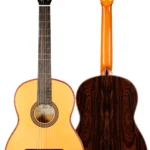
Technical Guide to Guitar Tonewoods
Soundboard tonewoods The soundboard is the sound-generating element of the guitar. Its ability to vibrate defines the power and personality of the tone, making it the piece that most influences the final result. German spruce (Picea abies) Appearance: Cream-white colour that evolves towards a golden tone over time. Features very straight, tight and uniform grain…
Table of contents
Soundboard tonewoods
The soundboard is the sound-generating element of the guitar. Its ability to vibrate defines the power and personality of the tone, making it the piece that most influences the final result.
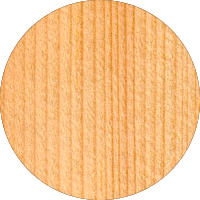
German spruce
(Picea abies)
Appearance: Cream-white colour that evolves towards a golden tone over time. Features very straight, tight and uniform grain lines.
Sound: Produces a very clean, clear sound with bright highs that stand out easily. It is a wood that “awakens” with use: the more the guitar is played over the years, the richer the sound becomes and the volume increases noticeably. Ideal for those seeking clarity and each note heard perfectly separated.
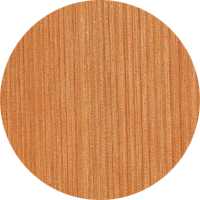
Canadian cedar
(Thuja plicata)
Appearance: Dark reddish-brown colour. A warmer-looking wood with very pronounced and regular grain lines.
Sound: Offers a warm, sweet sound with lots of “body” from the very first day, as it does not need years of playing in to sound good. It is a very sensitive wood that responds with great power even when played softly, making it very comfortable and rewarding to play.
Tonewoods for sides and back
The body acts as the resonance structure. Its function is to envelop the soundboard’s tone and give it body, depth and nuance.
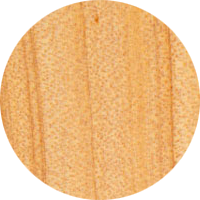
Spanish cypress
(Cupressus sempervirens)
Appearance: Light, clean yellow colour. An extremely light wood with a fine texture.
Sound: This is the standard sound of flamenco. Very bright and “dry”: the note sounds with great force instantly, but disappears quickly. This is fundamental for fast rasgueados to sound clean and for notes not to blend together, keeping the rhythm clearly defined.
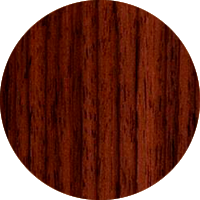
Indian rosewood
(Dalbergia latifolia)
Appearance: Dark chocolate brown with purple or black lines. Has visible pores and a very elegant grain.
Sound: The standard for quality classical guitars. Provides very powerful, round and deep bass tones. Its main characteristic is that notes have a long duration (sustain); when you pluck a string, the sound keeps vibrating for a long time, creating a very rich and full sonic experience.
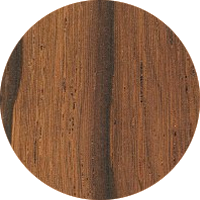
Madagascar rosewood
(Dalbergia baronii)
Appearance: Reddish-brown colour with very striking black grain lines and very decorative natural patterns.
Sound: Behaves similarly to Indian rosewood, but with an extra degree of clarity. Notes are heard very clearly across the full range and it has generous volume. It is a wood that makes the guitar feel very powerful with a very defined sound.
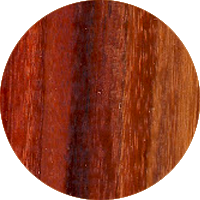
Mexican granadillo
(Platymiscum yucatanum)
Appearance: Very dark brown, almost black. An extremely heavy, hard wood with a very smooth surface.
Sound: Known as “the wood that sings” because it has a bell-like sound: very clean and clear. Its great advantage is that it keeps the sound very direct without losing power, allowing the player to hear every nuance with total precision.
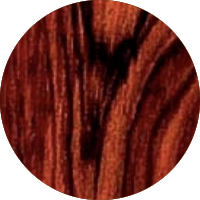
Cocobolo
(Dalbergia retusa)
Appearance: A mix of intense red, orange and black. A very heavy wood with an oily feel.
Sound: Brings great power and an explosive volume. The sound comes out with great force and has very lively and sparkling highs. It gives the guitar a lot of personality and an energetic character, ideal for those seeking a sound with real bite.
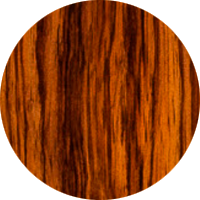
Palo escrito
(Dalbergia palo escrito)
Appearance: A café au lait colour with thin reddish lines. Lighter than other rosewoods.
Sound: Produces a very sweet, vibrant and pleasant sound. A very rewarding wood because the guitar feels very alive when played, allowing each note in arpeggios to be heard with great softness and clarity.
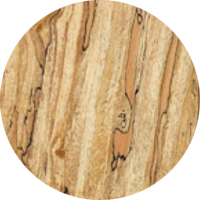
Spalted maple
(Acer saccharum)
Appearance: Cream colour with thin black lines. Visually a unique and exotic wood.
Sound: Offers a very pure and natural sound. It does not artificially add bass or treble, allowing you to hear exactly what the soundboard is producing, with total transparency.
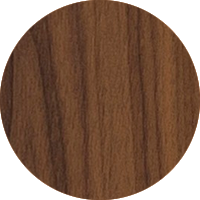
Walnut
(Juglans regia)
Appearance: Earth-brown with sober, very organic-looking grain.
Sound: A very balanced midpoint: depth and clarity. Sounds very “wooden”, with very defined mid-tones that produce a very natural and pleasant result to the ear.
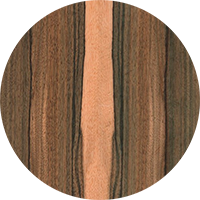
Green ebony
(Diospyros durionoides)
Appearance: Dark colour with green and grey flashes. Very compact and hard.
Sound: Being such a rigid wood, it produces a very bright sound with a very fast note attack. It helps to keep notes under control and prevents the sound from muddying in fast musical passages.
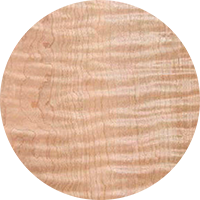
Curly maple
(Acer pseudoplatanus)
Appearance: Pearlescent white with waves that shimmer and seem to move in the light.
Sound: Very clear, focused sound especially in the higher notes. Offers total cleanliness and makes the guitar sound very crystalline, ideal for those seeking a defined tone without excessive bass.
Bridge tonewoods
The bridge is the component responsible for transmitting the energy from the strings directly to the soundboard.
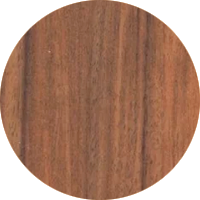
Pau ferro
(Machaerium scleroxylum)
Appearance: Brown with dark grain lines. Very dense and almost poreless.
Behaviour: Being so hard, it transmits string vibration immediately, which helps the sound have more attack and notes ring out with more clarity from the moment of plucking.
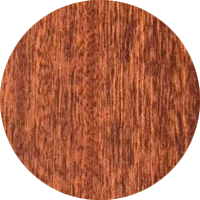
Sapele
(Entandrophragma cylindricum)
Appearance: Reddish mahogany colour.
Behaviour: A very stable wood that holds string tension without deforming, offering consistent and balanced sound transmission.
Indian rosewood
(Dalbergia latifolia)
Behaviour: The traditional choice for high-end guitars. Has just the right weight to allow notes to sustain for a long time without damping the natural movement of the soundboard.
Tonewoods for the neck and fingerboard
The neck ensures the structural stability of the instrument, while the fingerboard provides the contact surface for playing.
Brazilian cedar
(Cedrela odorata)
Appearance: Pink cinnamon-brown colour.
Properties: The favourite wood for the neck because it is very light yet extremely strong. It ensures the neck does not bow over the years, keeping the guitar always comfortable to play.
Indian rosewood
(Dalbergia latifolia)
Properties: Used in luxury guitars to add mass. Increases note duration (sustain), making the sound denser, though the guitar is slightly heavier.

African ebony
(Diospyros crassiflora)
Appearance: Pure black, very dense and with no visible grain.
Properties: The hardest and most resistant wood. It does not wear down from the friction of strings or nails. It helps make the sound brighter and allows the fingers to glide with total smoothness across its polished surface.